How to Keep Your Indoor Ferns Lush and Green Year Round
Indoor ferns transform ordinary rooms into enchanting green sanctuaries, their delicate fronds cascading like emerald waterfalls from ceramic pots and woven baskets.
These ancient plants thrive when their caretakers understand a few essential secrets about light, moisture, and temperature. The journey to maintaining vibrant, healthy ferns throughout every season becomes surprisingly simple once the fundamentals click into place.
With the right approach, anyone can cultivate these lush beauties and enjoy their peaceful presence year-round.
Quick Summary
- Position ferns near east-facing windows for gentle morning light, avoiding harsh direct sunlight from southern exposures.
- Water two to three times weekly during growing seasons using moisture tests, and mist daily to maintain forest-like humidity.
- Use well-draining soil mix with peat moss, perlite, and compost in containers with proper drainage holes.
- Maintain stable temperatures between 60-75°F and reduce watering frequency during winter dormancy periods.
- Fertilize once monthly during active growth, pausing completely during dormant seasons to respect natural cycles.
Understanding Your Fern’s Natural Habitat and Light Requirements
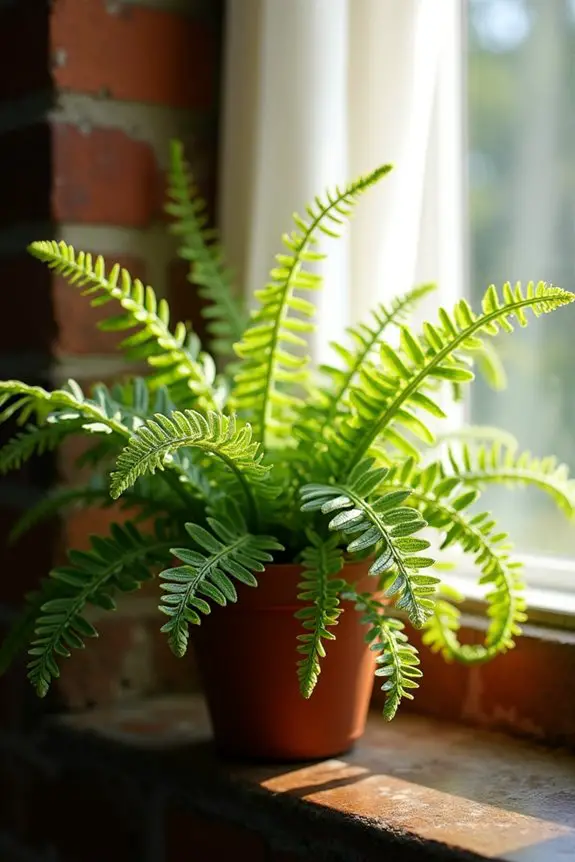
Most ferns flourish naturally beneath towering forest canopies, where dappled sunlight filters through emerald leaves to create their ideal growing conditions.
Understanding this fern habitat helps indoor gardeners replicate the same peaceful, shaded environment these ancient plants crave. Position ferns near east-facing windows where gentle morning rays bathe their delicate fronds, or place them several feet from brighter southern exposures.
The key is managing light intensity….. these woodland treasures prefer soft, indirect illumination rather than harsh direct beams.
Creating this filtered light effect transforms ordinary rooms into tranquil indoor gardens where ferns display their signature cascading beauty throughout every season.
Mastering the Art of Proper Watering Techniques
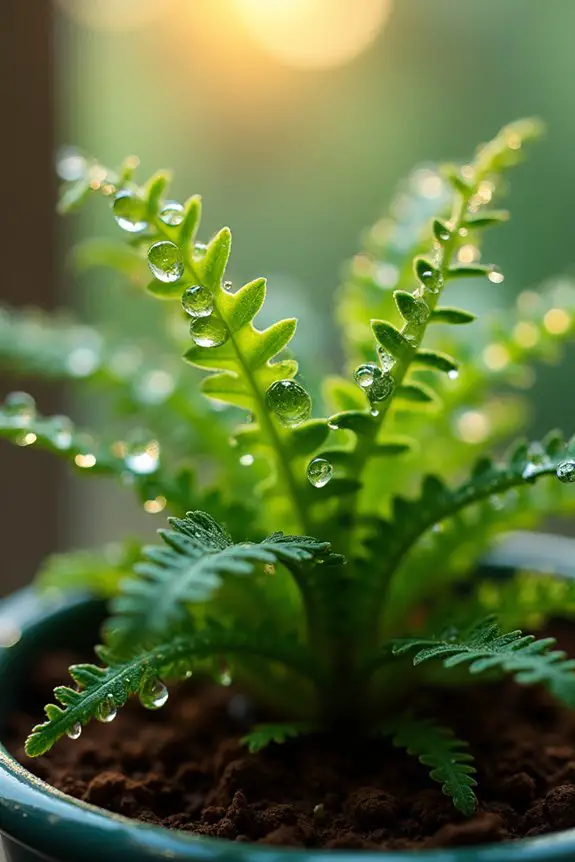
Beyond establishing the perfect lighting arrangement, water becomes the lifeblood that keeps these verdant beauties thriving in home environments.
Frequency schedules transform chaotic guesswork into reliable rhythms, typically requiring attention two to three times weekly during growing seasons.
Moisture indicators prove invaluable, whether simple finger tests or sophisticated meters that measure soil dampness precisely.
| Watering Method | Best For | Key Benefit |
|---|---|---|
| Bottom soaking | Dense root systems | Even moisture distribution |
| Misting | Humidity-loving varieties | Replicates forest conditions |
| Direct pouring | Established plants | Quick, efficient hydration |
Morning watering allows your ferns to absorb moisture effectively while giving excess water time to evaporate, preventing the soggy conditions that can lead to root rot as evening temperatures drop.
Since city water often contains chlorine and fluoride that can harm sensitive fern roots, letting tap water sit overnight before use allows these chemicals to naturally dissipate.
If you notice waterlogged conditions in your fern’s pot, a light application of baby powder can help absorb excess moisture and reduce the risk of root rot.
Consistent moisture creates those stunning emerald fronds that transform ordinary rooms into peaceful botanical sanctuaries.
Creating the Perfect Humidity Levels for Thriving Ferns
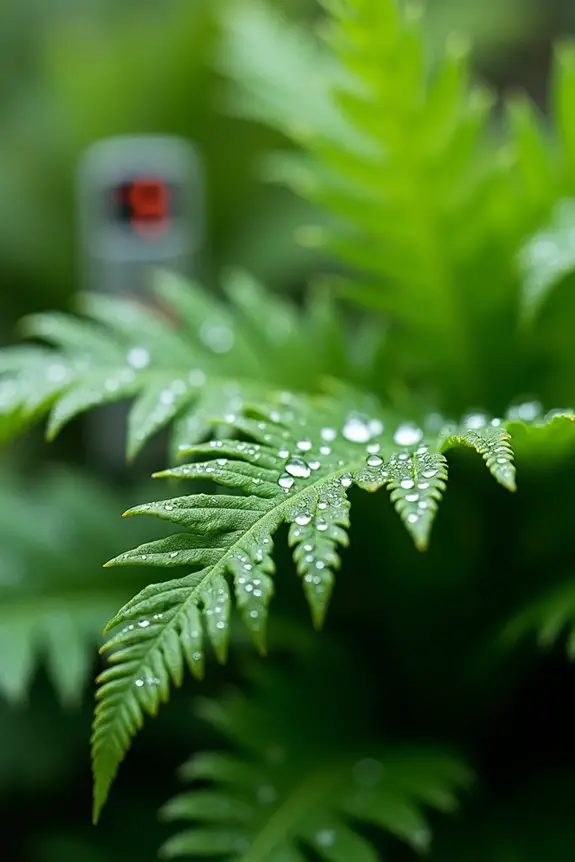
Why do ferns flourish in bathrooms yet struggle in living rooms despite identical watering schedules? The answer lies in humidity, the secret ingredient that transforms ordinary ferns into cascading emerald masterpieces.
Boost moisture levels through these effective approaches:
- Place pebble-filled humidity trays beneath pots, adding water just below the stones.
- Practice daily misting techniques using room-temperature water in gentle, cloud-like sprays.
- Group ferns together to create their own microclimate of shared moisture.
These simple methods recreate the misty forest environments where ferns naturally thrive, encouraging lush fronds that arch gracefully toward filtered light with vibrant, jewel-toned green leaves.
Choosing the Right Soil Mix and Potting Containers
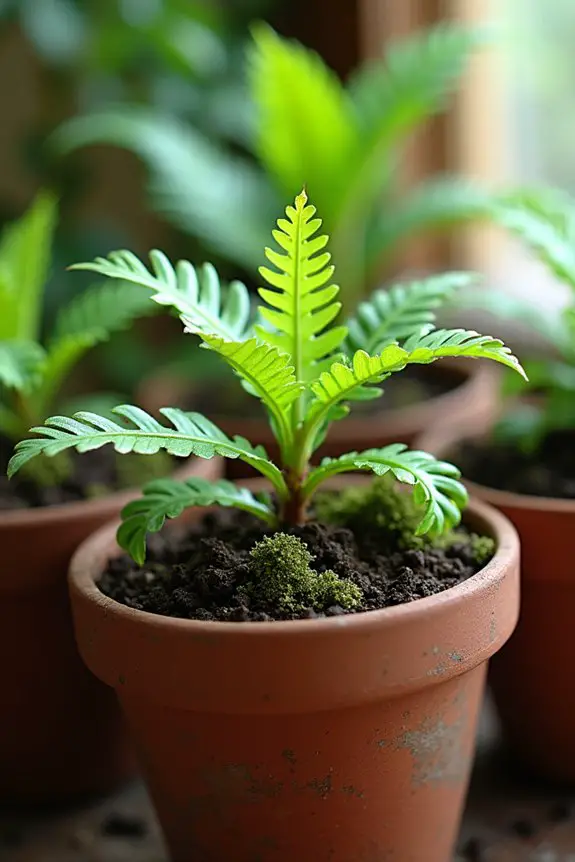
Like a foundation supporting a magnificent building, the right soil mixture provides everything ferns need to develop robust root systems and spectacular foliage.
Premium soil composition combines peat moss, perlite, and rich compost in equal portions, creating an airy blend that drains beautifully while retaining essential moisture.
Potting materials matter tremendously; terracotta containers breathe naturally, preventing waterlogged roots, while glazed ceramic pots in soft cream or sage green add elegant charm.
Select containers with drainage holes measuring at least one inch wider than current root balls, allowing graceful expansion and years of stunning growth ahead.
Maintaining Optimal Temperature Ranges Throughout the Seasons
Temperature stability transforms ordinary ferns into breathtaking showpieces that cascade with verdant life throughout every season.
Maintaining consistent warmth between 60-75°F creates the perfect haven for thriving fronds that unfurl with remarkable grace and vigor.
Smart seasonal adjustments protect delicate foliage from harmful temperature fluctuations:
- Position ferns away from drafty windows during winter months
- Shield plants from heating vents that blast hot, drying air
- Move containers from cold exterior walls when temperatures drop
These simple strategies ensure year-round success, allowing lush emerald leaves to flourish magnificently while creating peaceful indoor sanctuaries filled with natural beauty.
Fertilizing Your Ferns for Maximum Growth and Vibrancy
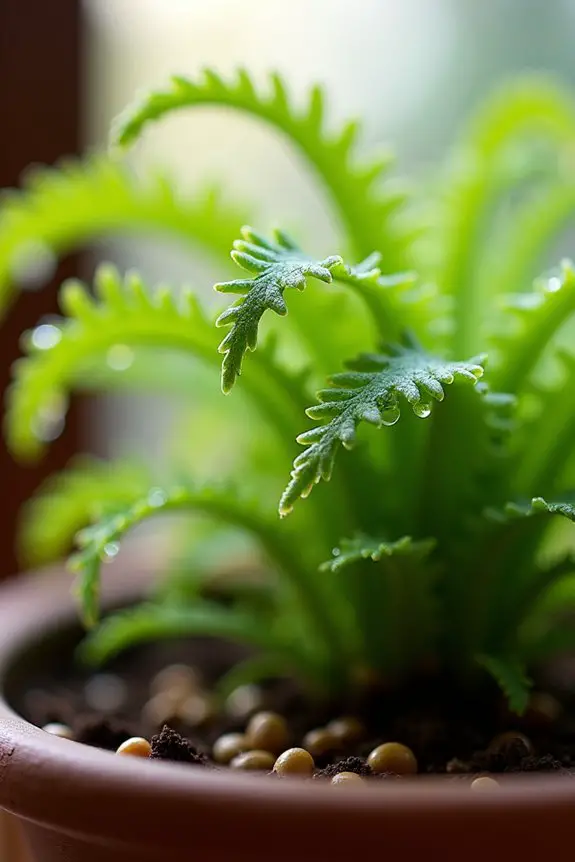
When ferns receive properly balanced nutrients at regular intervals, their fronds transform into cascading masterpieces that shimmer with deep emerald richness and extraordinary energy.
Organic fertilizers deliver gentle nourishment that mirrors nature’s perfect design, feeding roots without harsh chemical interference. Liquid nutrients absorb quickly through soil, reaching hungry fronds within days to spark vibrant new growth.
Apply diluted formulas every two to four weeks during spring and summer, then reduce frequency when autumn arrives.
This rhythmic feeding schedule creates lush specimens with glossy fronds that arch gracefully overhead, turning ordinary rooms into enchanted indoor gardens that pulse with life.
Pruning and Grooming to Promote Healthy Fronds
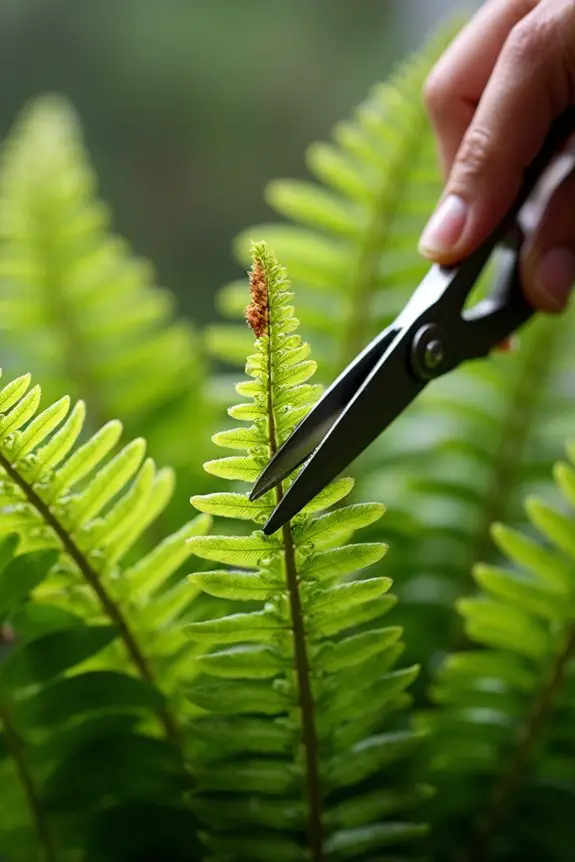
Strategic trimming transforms overgrown ferns into sculptural wonders that showcase nature’s architectural brilliance while protecting plant health for seasons ahead.
Regular frond maintenance keeps your green companions thriving through deliberate leaf trimming that removes damaged, yellowing, or browning sections with clean, sharp scissors.
Essential grooming practices include:
- Snipping brown frond tips at an angle to maintain natural appearance
- Removing entire yellowed fronds at the base to redirect energy
- Clearing away dried debris from the soil surface weekly
This gentle attention reveals fresh emerald growth beneath tired foliage, creating cascading displays of vibrant greenery that breathe life into every corner of your indoor sanctuary.
Preventing and Treating Common Fern Pests and Problems
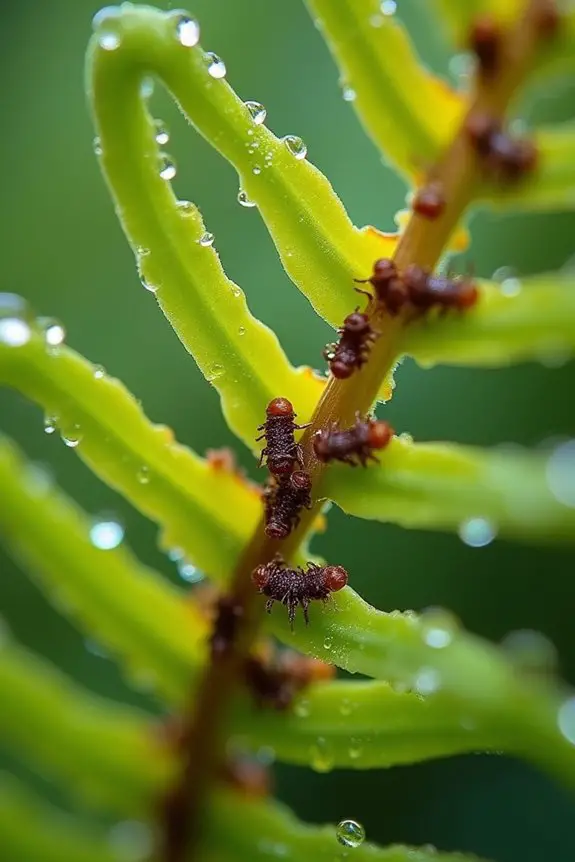
Tiny invaders and mysterious ailments threaten even the most pampered ferns, but vigilant observation transforms potential disasters into minor setbacks easily conquered with swift action.
Pest identification becomes second nature when gardeners inspect delicate fronds weekly, spotting scale insects‘ brown bumps or spider mites’ telltale webbing early.
Treatment options range from gentle neem oil sprays to insecticidal soaps that protect without harming tender foliage. Yellowing fronds often signal overwatering rather than disease, while crispy brown edges whisper pleas for humidity.
Armed with knowledge and quick responses, fern enthusiasts banish problems swiftly, restoring their verdant treasures to thriving magnificence.
Adjusting Your Care Routine for Winter Dormancy
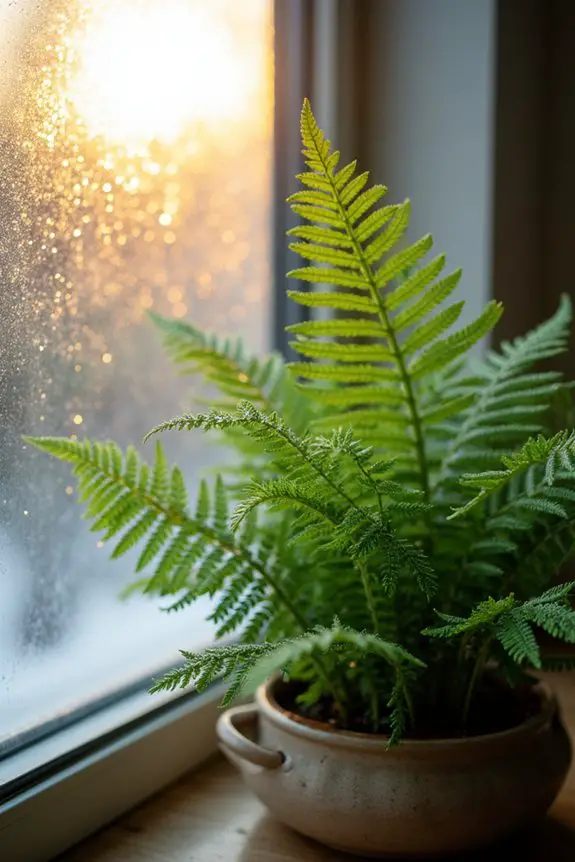
As autumn’s golden light fades into winter’s cool embrace, indoor ferns whisper their need for rest and slower rhythms that mirror nature’s ancient patterns.
Recognizing dormancy signs like slower growth and paler fronds helps you adjust watering schedules and embrace this peaceful seasonal shift.
Transform your winter care routine with these essential adjustments:
- Reduce watering frequency by half, allowing soil to dry slightly between drinks
- Position ferns near winter light sources without harsh direct rays
- Lower fertilizer applications to once monthly or pause completely
This gentler approach honors your ferns’ natural cycles, ensuring they emerge vibrant when spring’s warmth returns once more.
Popular Questions
Can I Propagate My Fern and What’s the Easiest Method?
Most ferns readily propagate through division—simply separate root clumps during repotting. Among fern propagation methods, this proves simplest for beginners. Following proper fern care tips, gardeners maintain moisture levels while new divisions establish themselves successfully.
Are Ferns Safe for Cats, Dogs, and Other Household Pets?
Most ferns are considered pet friendly plants with low toxicity levels for cats, dogs, and other household pets. However, owners should verify specific fern varieties, as some exceptions exist that may cause mild gastrointestinal upset if ingested.
How Long Do Indoor Ferns Typically Live With Proper Care?
Like timeless companions, indoor ferns lifespan can extend decades when provided ideal conditions. With proper humidity, indirect light, and consistent watering, these resilient plants often thrive for 20-30 years, sometimes even surpassing human expectations indefinitely.
Can I Move My Fern Outdoors During Summer Months?
Yes, indoor ferns can transition outdoors during summer. Outdoor fern care requires shaded placement and consistent moisture. Fertilizing ferns becomes more important with increased growth. Gradually acclimate plants to prevent shock, then return them indoors before temperatures drop.
What Fern Varieties Are Best for Low-Maintenance Beginners?
For those without green thumbs, Boston Ferns prove forgiving companions, tolerating occasional neglect gracefully. Maidenhair Ferns, however, demand constant attention and humidity—best avoided by beginners seeking low-maintenance varieties that won’t wither at minor missteps.