How to Design Hillside Vegetable Garden Ideas That Retain Soil
Steep hillsides transform into productive garden sanctuaries when thoughtful design meets nature’s challenges.
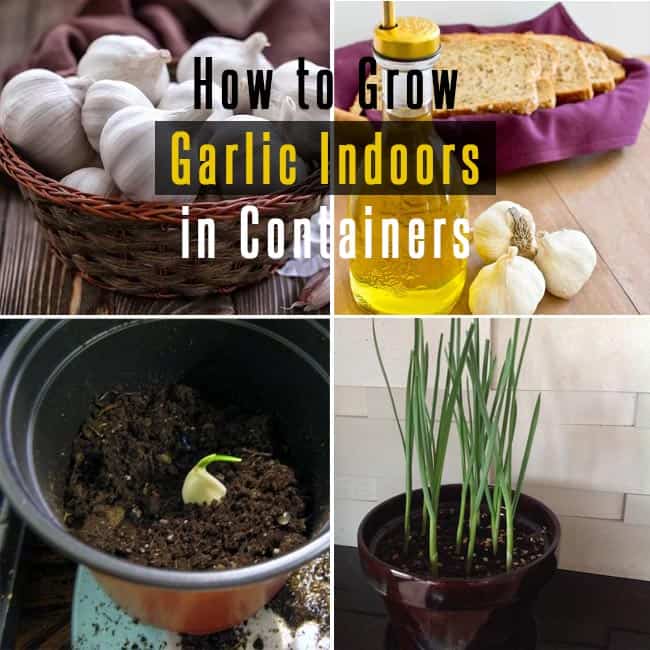
Stone terraces cascade down sun-drenched slopes, holding rich dark soil that would otherwise wash away with spring rains. Wooden retaining walls create level planting beds where tomatoes climb and lettuce thrives, while carefully carved swales guide precious water exactly where growing vegetables need it most.
The secret lies in working with gravity rather than against it, turning erosion problems into abundant growing opportunities.
Quick Summary
- Build terraced garden beds using stone walls or wooden planks to create stepped platforms that prevent soil erosion.
- Install retaining walls with proper drainage systems to provide essential slope stabilization and structural support for growing areas.
- Create swales and berms to redirect water flow, transforming destructive runoff into beneficial irrigation for plant root zones.
- Select deep-rooted perennial vegetables and native plants that naturally anchor soil while providing edible harvests throughout seasons.
- Observe water movement patterns during storms to identify problem zones and strategically place soil retention features accordingly.
Understanding Water Movement and Drainage Patterns on Slopes

When water dances down a hillside, it carves invisible highways that smart gardeners learn to read like ancient maps.
These natural pathways reveal where precious rainwater gathers speed, creating rushing torrents that steal topsoil and nutrients. Observing water flow patterns during storms helps gardeners identify problem zones where erosion threatens their green dreams.
Gentle slopes encourage water to meander peacefully, while steep inclines send cascades racing downward. Understanding these liquid journeys allows thoughtful planners to work with nature’s rhythm.
Strategic placement of terraces and retention systems transforms destructive torrents into life-giving streams, ensuring slope stability while nurturing thriving vegetable gardens that flourish season after season.
Building Terraced Garden Beds for Maximum Soil Retention
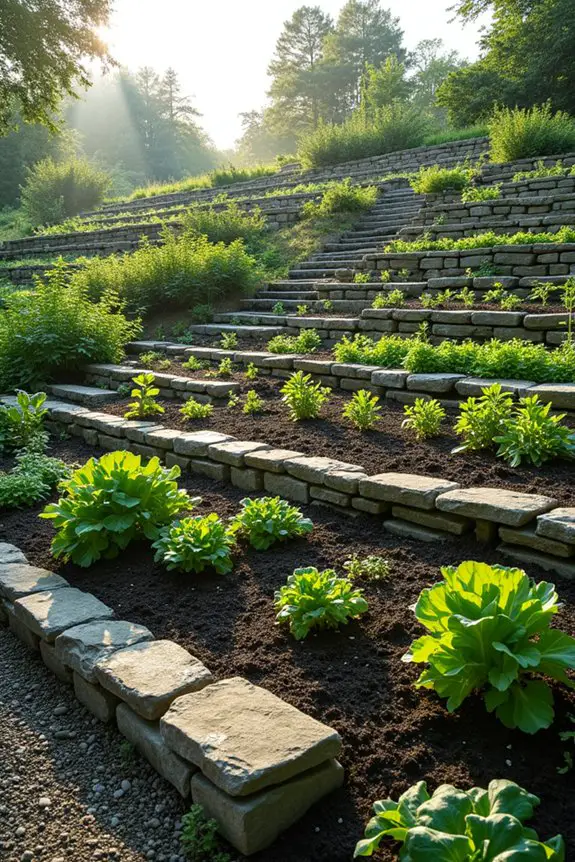
Stone walls and wooden planks become the backbone of terraced gardens, creating stepped platforms that cradle precious soil like nature’s own amphitheater.
Each level transforms steep slopes into gentle, workable spaces where vegetables thrive in perfect harmony. The terraced layout maximizes growing area while preventing erosion through strategic placement of retaining materials.
Cedar boards and fieldstone create stunning boundaries that hold rich earth securely in place. Soil stability improves dramatically as water flows gently from tier to tier, nourishing plants without washing away nutrients.
These cascading garden rooms offer endless possibilities for creative planting arrangements and bountiful harvests. Between vegetable rows, ground cover plants like creeping thyme or sedum varieties can further stabilize soil while adding natural beauty to the terraced landscape.
Installing Retaining Walls and Structural Support Systems
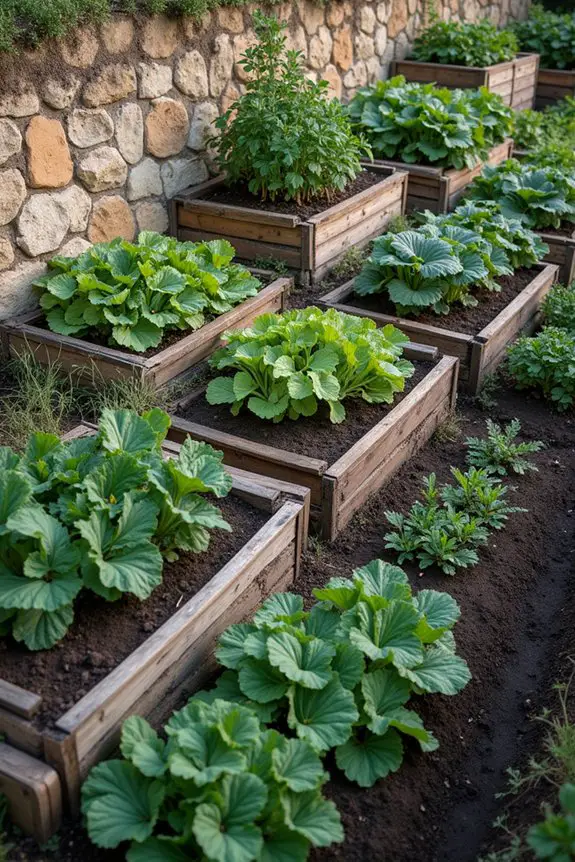
Foundation work determines the success of every hillside garden, where properly installed retaining walls create the structural backbone that transforms challenging terrain into productive growing space.
Stone, concrete blocks, and timber offer diverse retaining wall materials that blend beautifully with natural surroundings while providing essential slope stabilization.
Strategic placement of drainage pipes behind walls prevents water buildup that could compromise structural integrity.
Structural support techniques include proper footing depth, reinforcement bars, and stepped construction methods that distribute soil pressure evenly.
These engineered solutions create stunning garden terraces that withstand weather while showcasing vibrant vegetables cascading down hillside levels.
Creating Swales and Berms to Control Water Flow
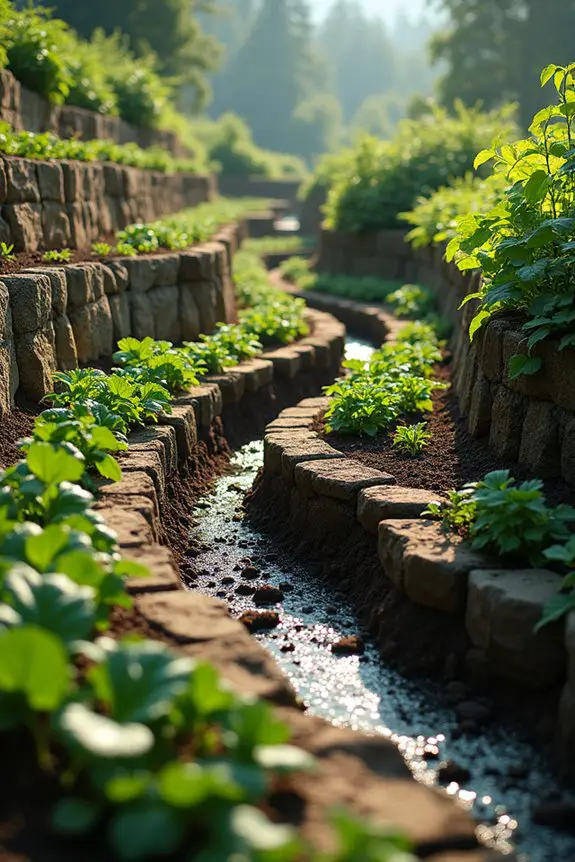
As rainwater dances down sloping terrain, gardeners can harness this natural energy by sculpting gentle swales and strategic berms that guide precious moisture exactly where vegetables need it most.
Thoughtful swale design creates curved channels that collect rushing water, transforming destructive runoff into nourishing streams that soak deeply into root zones.
Meanwhile, carefully planned berm construction forms raised earthen ridges that redirect flow patterns while creating perfect planting pockets for treasured crops.
These living sculptures work together like nature’s own irrigation system, turning challenging hillside conditions into productive growing spaces where tomatoes, beans, and leafy greens flourish abundantly.
Selecting Plants That Prevent Erosion While Producing Food
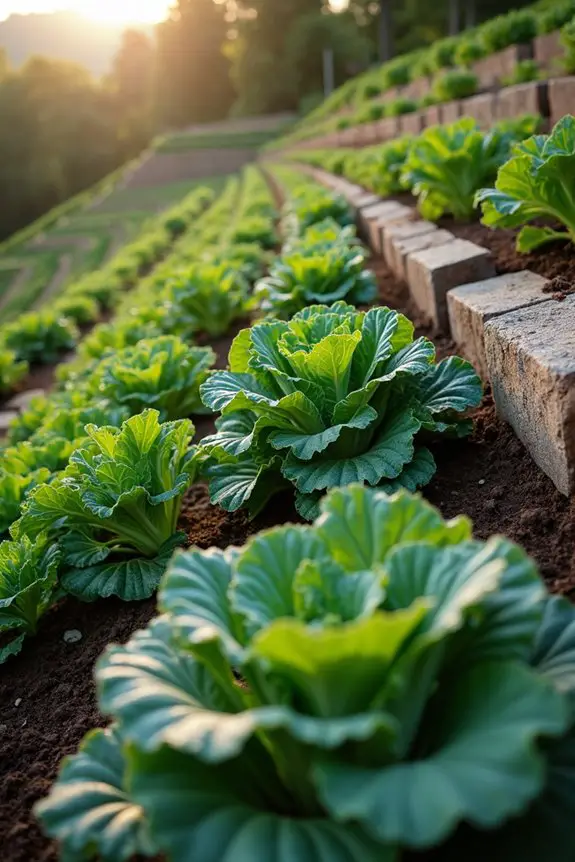
While traditional erosion control methods often sacrifice growing space for stability, clever gardeners can select remarkable plants that anchor hillside soil and deliver bountiful harvests throughout the season.
Deep-rooted perennial vegetables like asparagus and artichokes create living foundations, their fibrous networks weaving through earth like protective blankets.
Native species such as wild ginger and native strawberries naturally thrive on slopes while producing delicious rewards.
Companion planting transforms steep terrain into productive paradise, pairing nitrogen-fixing beans with sprawling squash that carpets hillsides in emerald abundance. Winter varieties of squash like butternut and acorn store exceptionally well, providing long-term sustenance even after the growing season ends.
These thoughtful combinations create edible landscapes that protect precious topsoil.
Root vegetables like potatoes and carrots offer natural protection from elements while their high nutritional value makes them essential components of any productive hillside garden.
Implementing Mulching and Ground Cover Strategies
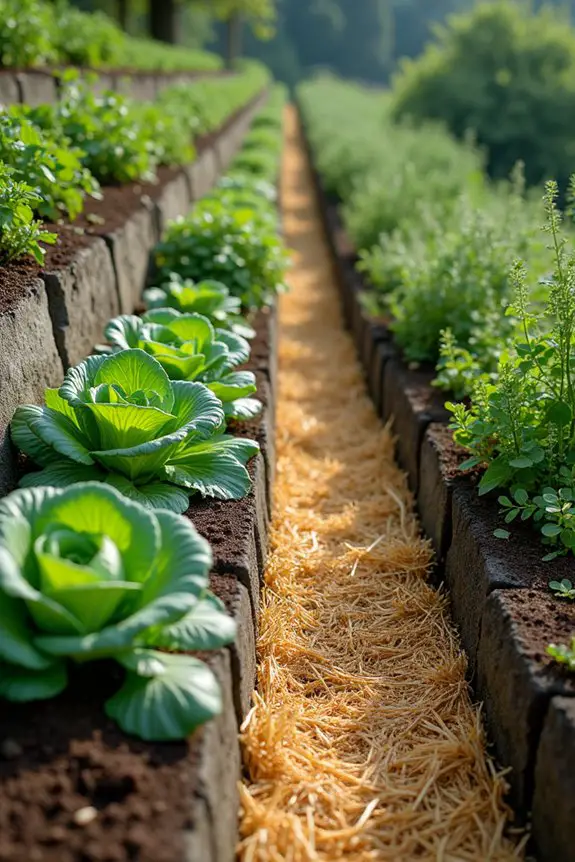
Beyond selecting the perfect erosion-fighting plants, smart hillside gardeners transform their sloped terrain into thriving ecosystems through strategic mulching and ground cover techniques.
Rich organic mulch materials like shredded bark, straw, and compost create protective blankets that lock moisture into the soil while preventing precious topsoil from washing away during heavy rains.
| Mulch Type | Best Uses | Coverage Duration |
|---|---|---|
| Shredded Bark | Pathways, decorative areas | 2-3 years |
| Straw | Vegetable beds, seasonal crops | 6-12 months |
| Wood Chips | Permanent plantings, trees | 1-2 years |
| Compost | All garden areas | 3-6 months |
Living ground cover creates enchanting carpets of green protection.
Designing Pathways and Access Routes for Steep Terrain
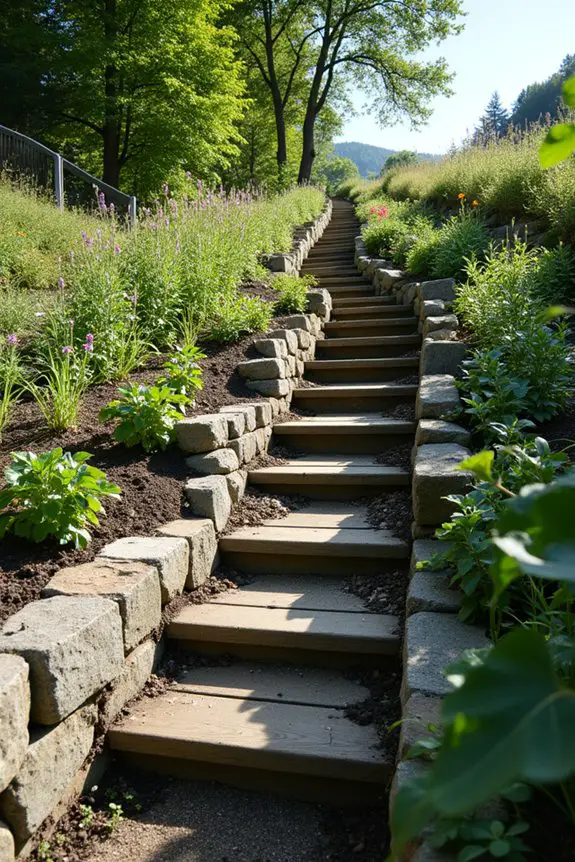
Winding pathways carved into hillside vegetable gardens become enchanting ribbons that transform challenging slopes into accessible wonderlands of fresh produce and natural beauty.
Strategic access routes weave between terraced beds, creating comfortable navigation zones that prevent soil compaction while protecting delicate root systems.
Thoughtfully selected pathway materials like natural stone, gravel, or wood chips provide stable footing during wet seasons and complement the garden’s organic aesthetic.
These carefully planned corridors connect different garden levels seamlessly, allowing gardeners to tend crops efficiently while maintaining the hillside’s structural integrity and preventing erosion through designated foot traffic patterns.
Maintaining Your Hillside Garden Through Seasonal Changes
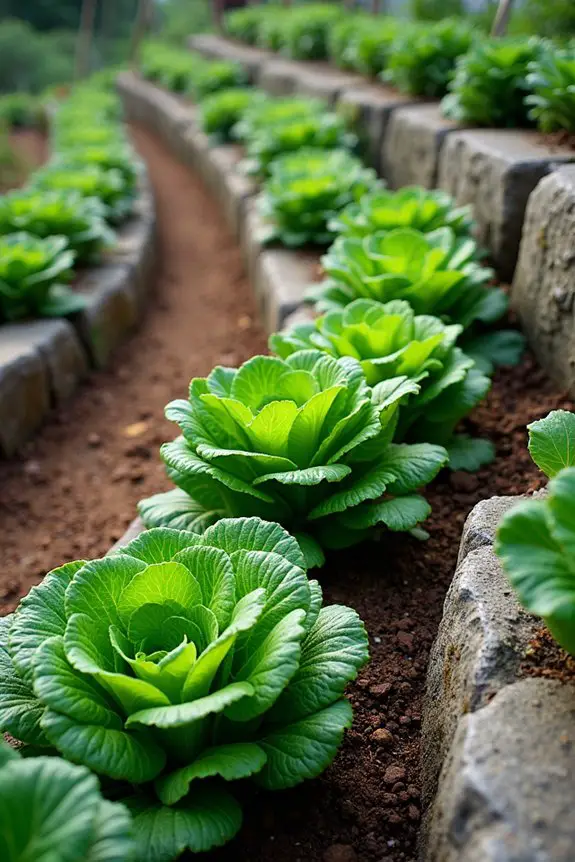
As seasons dance across hillside vegetable gardens, these sloping sanctuaries require thoughtful adjustments that honor nature’s changing rhythms while protecting precious harvests.
Spring awakens terraced beds with fresh plantings of cool-season crops like lettuce and peas, while gardeners add compost-rich soil amendments to nourish awakening earth.
Summer brings vibrant tomatoes cascading down sunny slopes, requiring deeper watering schedules and mulch layers.
Autumn transforms hillsides into golden tapestries where root vegetables thrive in cooler temperatures.
Winter calls for protective covers and strategic planning, as seasonal crops rotate through carefully tended terraces that embrace each month’s unique gifts.
Popular Questions
What Permits Are Required for Building Retaining Walls on Slopes?
Navigating permit waters requires homeowners to check local zoning regulations for retaining wall height limits and structural requirements. Most jurisdictions mandate permits for walls exceeding specific heights, with approval processes varying by wall materials chosen.
How Much Does It Cost to Establish a Hillside Vegetable Garden?
Establishing a hillside vegetable garden typically costs $2,000-$8,000, depending on slope severity and materials chosen. Thorough cost analysis and budget planning should account for terracing, soil amendments, irrigation systems, and ongoing maintenance requirements for sustainable cultivation.
Which Vegetables Grow Best in Sloped Garden Conditions?
Like mountain climbers gripping rocky terrain, root vegetables such as carrots and potatoes anchor themselves firmly in sloped soil. Drought resistant crops including beans, squash, and herbs thrive on hillsides where water naturally drains downward.
Can I Use Recycled Materials for Hillside Garden Construction?
Yes, gardeners can effectively utilize recycled materials for hillside construction. Old tires, pallets, and stones create excellent recycled planters and terracing systems. Reclaimed wood and plastic bottles form sturdy eco friendly barriers that prevent erosion while supporting sustainable gardening practices.
How Long Does It Take to See Soil Retention Results?
Like ancient Roman terraces, one typically observes initial soil retention within weeks of installation. However, significant soil health improvements and reduced erosion require consistent garden maintenance over several months to establish deep-rooted vegetation systems.