How to Choose the Best Hillside Vegetable Garden Ideas for Your Slope
A sloping backyard might seem like a gardening challenge at first glance, but it actually holds incredible potential for creating a thriving vegetable paradise.
The gentle roll of a hillside offers natural drainage, varied microclimates, and eye-catching vertical interest that flat gardens simply cannot match.
With the right approach, those awkward angles transform into cascading tiers of leafy greens, sun-warmed tomatoes, and trailing squash vines.
Quick Summary
- Assess your slope’s angle and grade to determine if terracing, raised beds, or contoured planting is most suitable.
- Evaluate soil drainage and erosion risk to identify where amendments, ground cover, or drainage solutions are needed.
- Map sun exposure patterns throughout the day to place vegetables in optimal microclimates for their light requirements.
- Choose between terraced beds for stability, containers for flexibility, or vertical structures to maximize growing space.
- Calculate available time, budget, and physical effort to select a hillside garden design that matches your resources.
Assess Your Slope’s Angle and Grade to Determine Feasibility
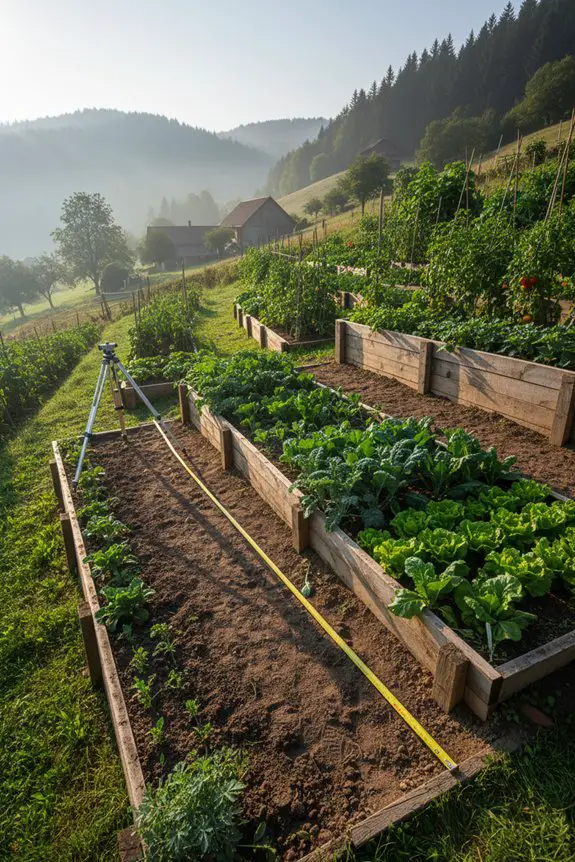
Understanding the terrain sets the foundation for a thriving hillside garden that transforms challenging slopes into productive growing spaces.
The gardener must first measure the incline using simple tools like a level and measuring tape, or observe how water flows across the land during rainfall.
Proper slope assessment reveals whether terraces, raised beds, or contoured rows will work best for cultivating vibrant tomatoes and crisp lettuce.
Gentle grades under fifteen degrees offer straightforward garden feasibility, while steeper inclines demand creative solutions like cascading beds that catch morning sunlight and evening dew, turning dramatic angles into stunning productive landscapes.
Evaluate Soil Quality, Drainage Patterns, and Erosion Risk
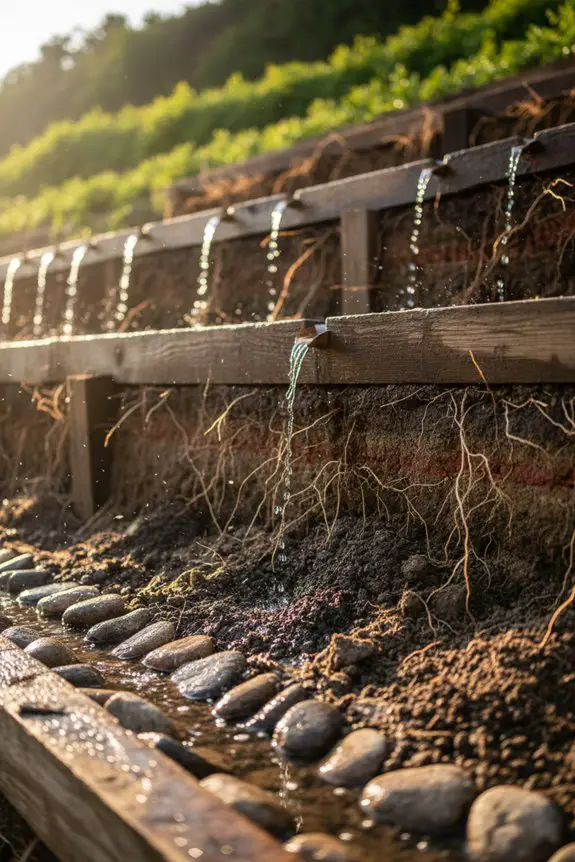
- Clay-heavy patches signal poor drainage, requiring soil amendments like compost and sand to create fluffy, breathable growing spaces.
- Water pooling patterns reveal where drainage solutions such as swales or perforated pipes become essential features.
- Bare soil patches indicate erosion threats demanding immediate ground cover plantings or terracing systems.
These findings transform steep challenges into thriving garden opportunities.
Map Sun Exposure Throughout the Day on Your Hillside
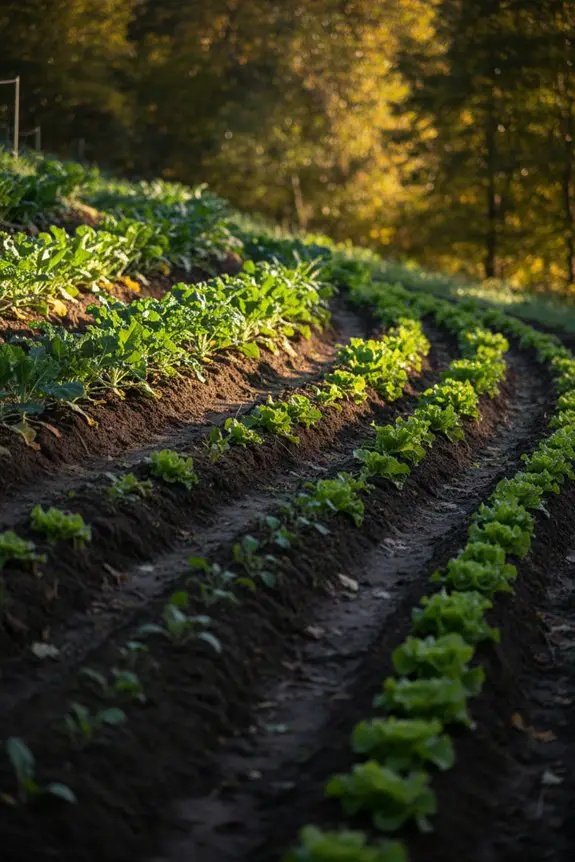
As morning light spills across the hillside’s contours, shadows dance and shift in patterns that dictate which vegetables will flourish where. Observing sun patterns reveals golden opportunities for heat-loving tomatoes on western exposures and cool-season greens in dappled morning light.
A simple shade analysis involves hourly observations throughout one full day, noting how structures, trees, and slope angles create microclimates. Photographs taken at dawn, midday, and dusk become invaluable mapping tools.
South-facing terraces bask in extended sunshine while northern slopes offer respite for delicate lettuces. Understanding these rhythms transforms challenging terrain into perfectly orchestrated growing zones.
For areas with limited water access or challenging growing conditions, consider incorporating drought-tolerant plants like Jerusalem artichokes or sorghum that can thrive with minimal irrigation while still providing edible harvests.
Terraced Garden Beds: The Classic Solution for Steep Slopes
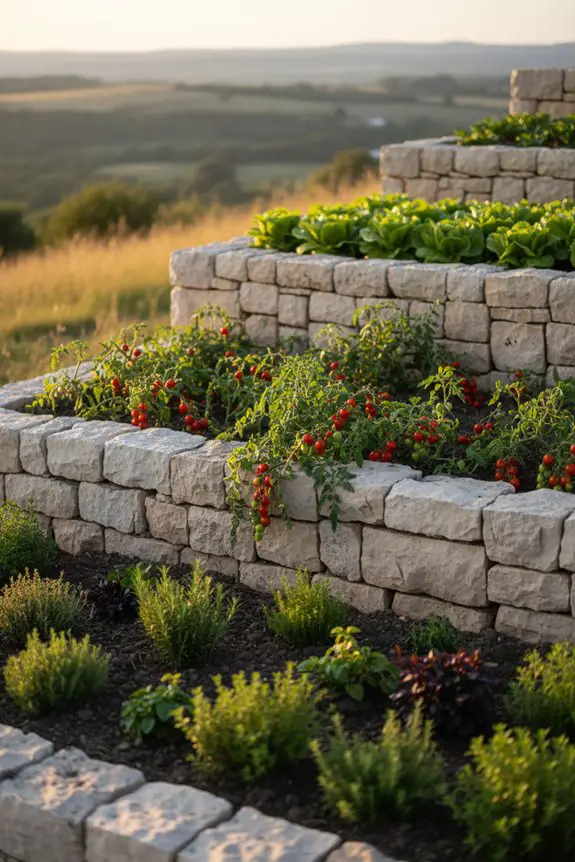
When gravity threatens to wash precious topsoil downhill with every rainstorm, terraced garden beds rise as the time-honored answer that transforms slopes into a productive paradise.
This terraced design creates stunning stepped platforms that hold soil firmly in place while showcasing vegetables in beautiful horizontal rows.
The practical benefits include:
- Reduced erosion through strategic water retention at each level
- Easier access with flat walking paths between planting areas
- Enhanced drainage that prevents waterlogged roots and disease
Each tier becomes a distinct growing zone, and the layered hillside aesthetics create a breathtaking cascade of colorful vegetables flowing down the slope like nature’s own amphitheatre.
Construction materials like stone, timber, or concrete blocks provide the structural foundation needed to create these retaining walls that serve as both functional barriers and attractive landscape features.
These durable materials extend the lifespan of your garden structures while providing the stability needed for long-term hillside cultivation.
Raised Boxes and Container Systems for Flexible Hillside Growing
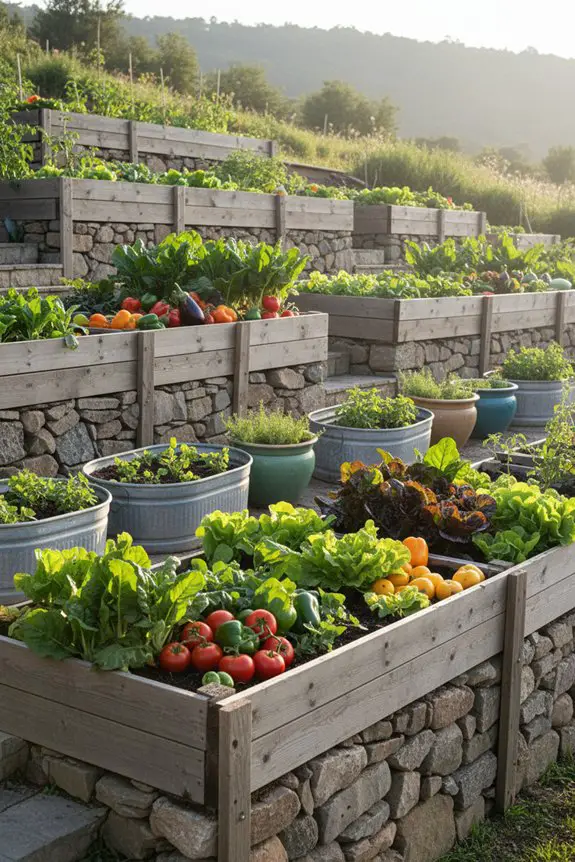
Freedom defines the container gardening approach, where portable growing boxes liberate hillside gardeners from the limitations of difficult terrain and challenging soil conditions.
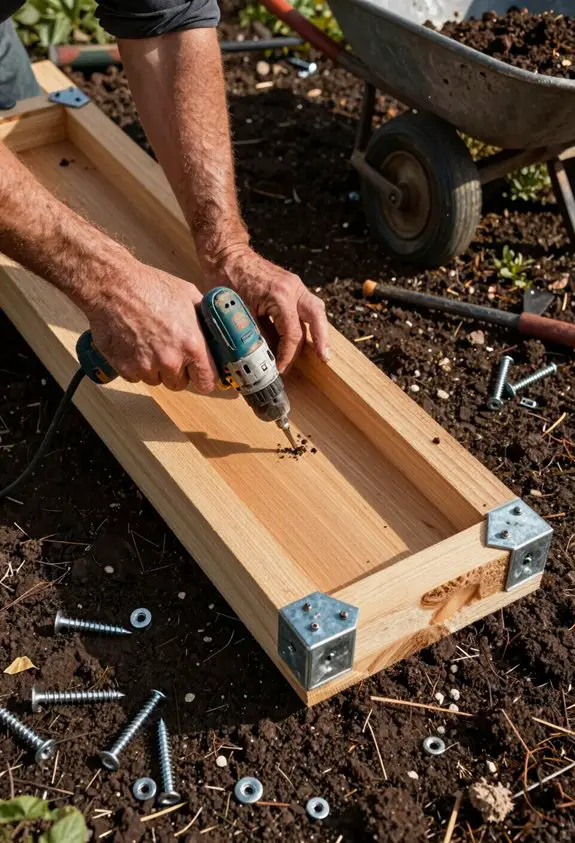
These raised bed designs transform steep slopes into productive spaces, offering gardeners complete control over soil quality, drainage, and placement.
Container varieties range from weathered cedar boxes to colorful ceramic pots, creating stunning visual displays while growing crisp lettuce, ruby tomatoes, and fragrant herbs.
| Container Type | Best Vegetables | Mobility Level | Aesthetic Appeal | Soil Volume |
|---|---|---|---|---|
| Cedar Boxes | Root vegetables | Low | Rustic charm | High |
| Fabric Grow Bags | Peppers, herbs | High | Modern, clean | Medium |
Contour Planting and Hugelkultur for Working With Natural Curves
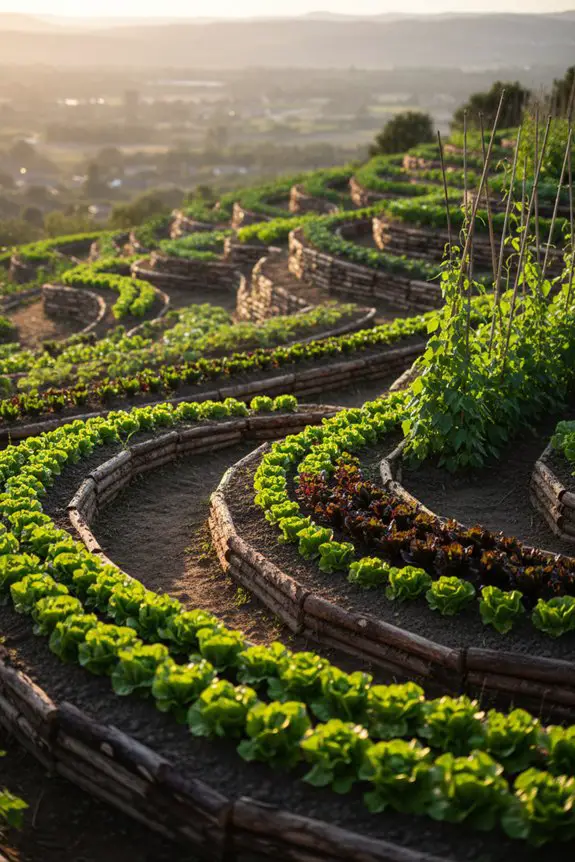
While containers offer portable solutions, working directly with a hillside’s natural contours creates gardens that flow like ribbons across the landscape.
Contour gardening follows the slope’s curves, preventing erosion while establishing graceful planting zones that embrace the terrain’s character.
Three hugelkultur benefits transform sloped spaces:
- Buried wood logs create moisture-holding mounds that feed plants for years
- Decomposing timber generates warmth, extending growing seasons naturally
- Raised berms reduce watering needs while improving drainage on steep grades
These earthworks blend seamlessly into hillsides, creating productive swales where vegetables thrive in sun-drenched rows that mirror the land’s original beauty.
Vertical Growing Structures to Maximize Sloped Garden Space
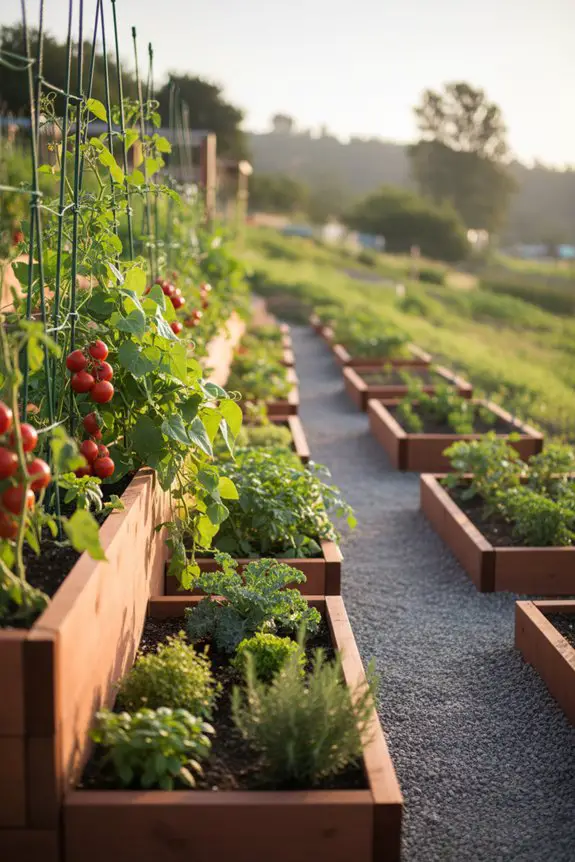
Trellises, arbors, and climbing frames transform steep garden slopes into vertical wonderlands where beans spiral skyward and tomatoes cascade downhill like edible waterfalls.
These structures maximize precious space while reducing soil erosion through strategic root systems. Climbing plants like cucumbers, peas, and squash weave through wooden lattices or metal grids, creating living tapestries of green foliage and colorful produce.
Vertical gardens positioned along hillside contours catch sunlight at multiple angles throughout the day, extending growing seasons naturally.
Sturdy cedar posts anchored into slope terraces support heavy loads of ripening vegetables while adding rustic charm to mountain-inspired landscapes.
Calculate Time, Budget, and Physical Effort Required for Each Design
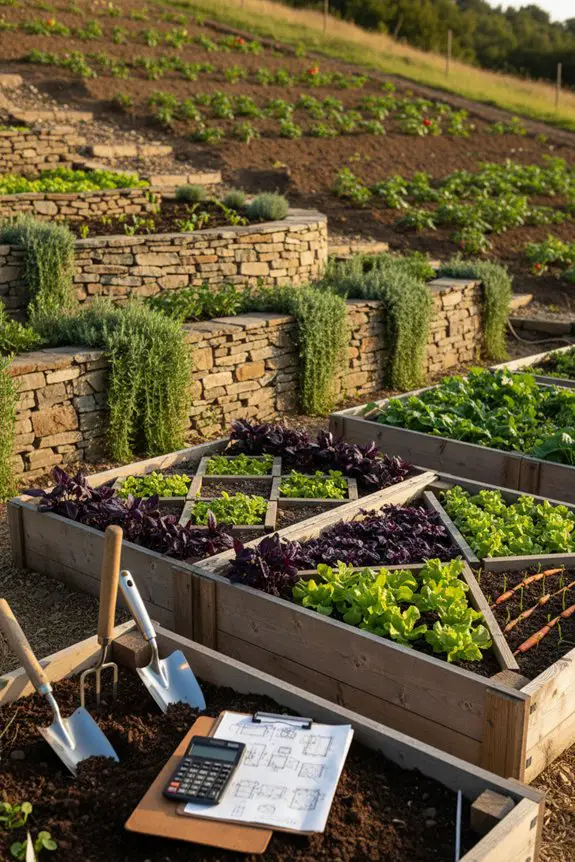
Before breaking ground on a hillside vegetable garden, gardeners must honestly assess the investment of hours, dollars, and sweat equity each design demands.
Critical planning factors include:
- Time estimation for terracing requires 40-60 hours compared to simpler container gardens needing just 8-10 hours of initial setup.
- Budget planning spans from $200 for basic raised beds to $3,000 for professional stone retaining walls with irrigation systems.
- Physical assessment and effort analysis reveal that moving soil uphill challenges even strong backs, while vertical towers minimize strenuous labor.
Smart gardeners match ambitious dreams with realistic capabilities, creating sustainable slope gardens.