Symbolism of the Lotus Flower Across Different Cultures
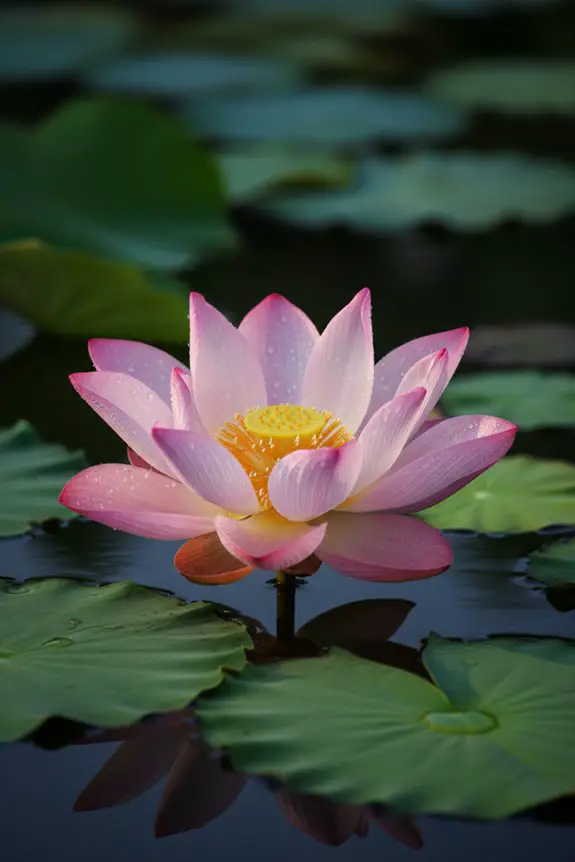
The lotus flower rises from murky waters each dawn, its pristine petals unfurling toward the sun in a display of breathtaking beauty.
This remarkable bloom has captivated civilizations for thousands of years, weaving its way through Egyptian temples, Hindu scriptures, Buddhist teachings, and Chinese art with equal grace.
Each culture uncovered profound meanings within its delicate pink and white petals, transforming a simple aquatic plant into a universal symbol that speaks to the deepest parts of the human spirit.
Quick Summary
- Ancient Egyptians associated the lotus with creation, rebirth, and eternal life, incorporating it into religious rituals and temple offerings.
- In Hinduism, the lotus symbolizes divine creation and purity, with deities like Brahma, Vishnu, Lakshmi, and Saraswati connected to it.
- Buddhism views the lotus as representing the journey from suffering to enlightenment, remaining pure despite rising from muddy waters.
- Chinese philosophy celebrates the lotus as a symbol of moral excellence and spiritual refinement in art, poetry, and garden design.
- Modern interpretations embrace the lotus as a universal symbol of resilience, inner peace, and beauty emerging from life’s struggles.
The Sacred Lotus in Ancient Egyptian Civilization
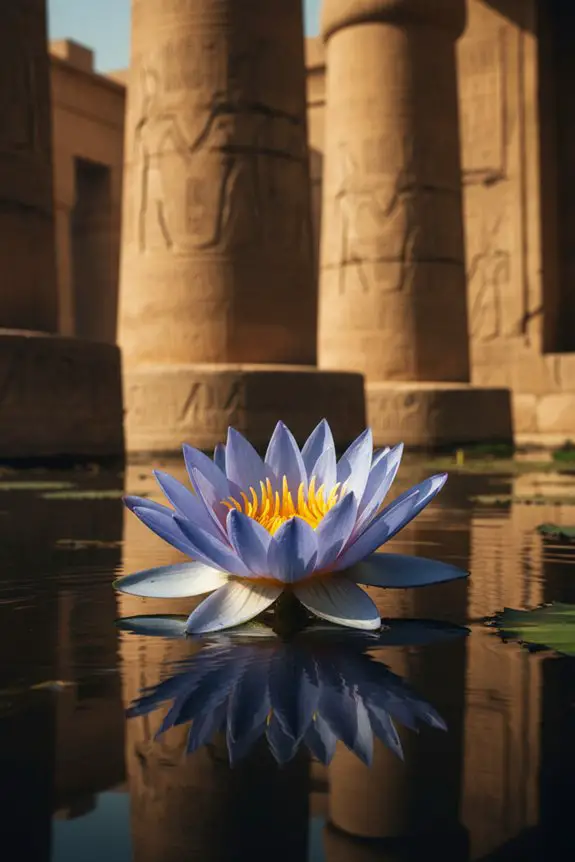
Along the fertile banks of the ancient Nile River, the sacred lotus flower emerged as one of Egypt’s most powerful and beloved symbols. Each morning, delicate pink and white blooms opened with the golden sun, inspiring profound spiritual meaning.
Egyptian lotus mythology connected these radiant flowers to creation itself, rebirth, and eternal life. Priests incorporated fragrant lotus blossoms into ancient rituals, offering them to honored deities in magnificent stone temples.
The flower’s ability to rise pure and beautiful from murky waters represented transformation and hope, captivating hearts across dynasties and inspiring countless artistic treasures still admired today.
Hindu Symbolism: Divine Creation and Spiritual Awakening
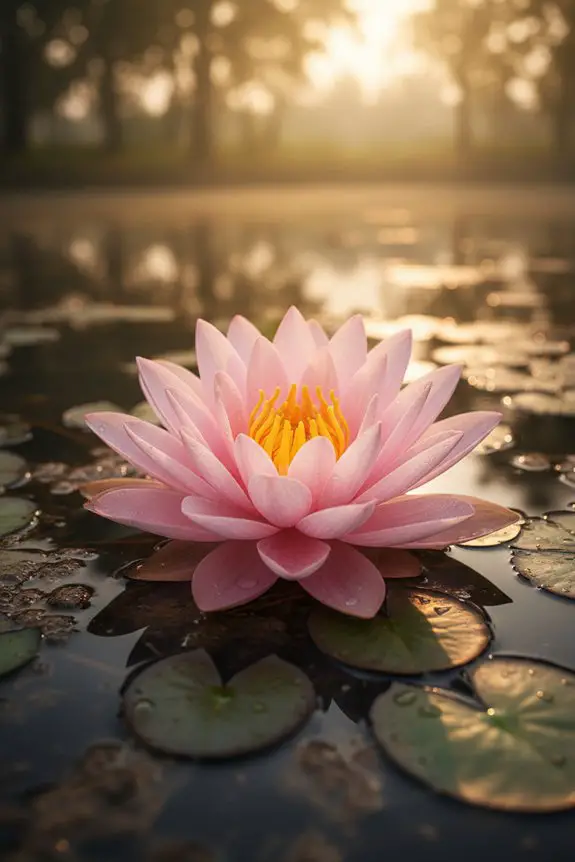
In Hindu tradition, the luminous lotus flower blooms as a sacred bridge between earthly existence and divine consciousness.
This magnificent blossom carries profound spiritual symbolism, representing purity rising from murky waters toward enlightenment.
According to lotus mythology, Lord Brahma emerged from a golden lotus sprouting from Vishnu’s navel, creating the universe itself.
| Deity | Lotus Association | Symbolic Meaning |
|---|---|---|
| Brahma | Born from golden lotus | Creative power, cosmic birth |
| Vishnu | Holds pink lotus | Preservation, divine truth |
| Lakshmi | Stands upon lotus | Prosperity, spiritual liberation |
| Saraswati | Sits on white lotus | Knowledge, artistic inspiration |
Buddhist Teachings and the Path to Enlightenment
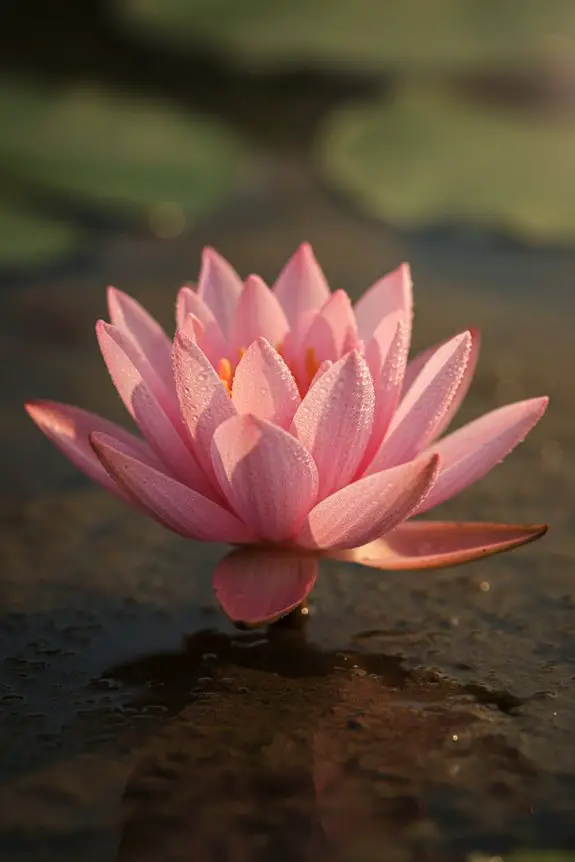
Throughout Buddhist philosophy, the lotus flower emerges as a powerful teacher of life’s most transformative spiritual lessons. Rising from murky pond depths into radiant blooms, it mirrors the Enlightenment journey from suffering to liberation.
During Buddhist meditation, practitioners visualize pristine white and pink petals unfolding toward sunlight, symbolizing consciousness expanding beyond earthly attachments.
Each delicate layer represents wisdom gained through compassionate living and mindful awareness.
The flower’s journey through muddy waters without staining its silk-soft petals inspires seekers to remain pure amid life’s challenges. This sacred bloom illuminates the path where darkness transforms into luminous awakening, guiding souls toward ultimate peace.
The Lotus in Chinese Philosophy and Art
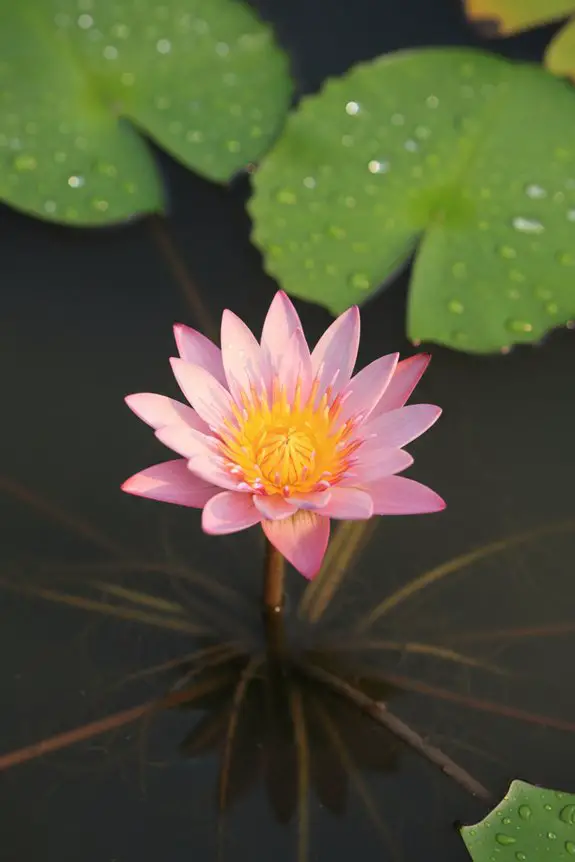
Ancient Chinese scholars revealed profound wisdom in the lotus, celebrating its graceful beauty through timeless paintings and philosophical writings. The flower emerged as a treasured symbol in Chinese aesthetics, representing purity rising from murky waters below.
Artists captured its delicate pink petals and jade-green leaves on silk scrolls, creating masterpieces that still inspire viewers today.
Lotus symbolism permeated poetry and garden design, reminding observers that noble character flourishes despite challenging circumstances.
Confucian thinkers admired its upright stem and unstained blossoms, viewing the plant as nature’s perfect teacher. This reverence transformed the lotus into an enduring icon of moral excellence and spiritual refinement.
Modern Interpretations and Universal Meanings
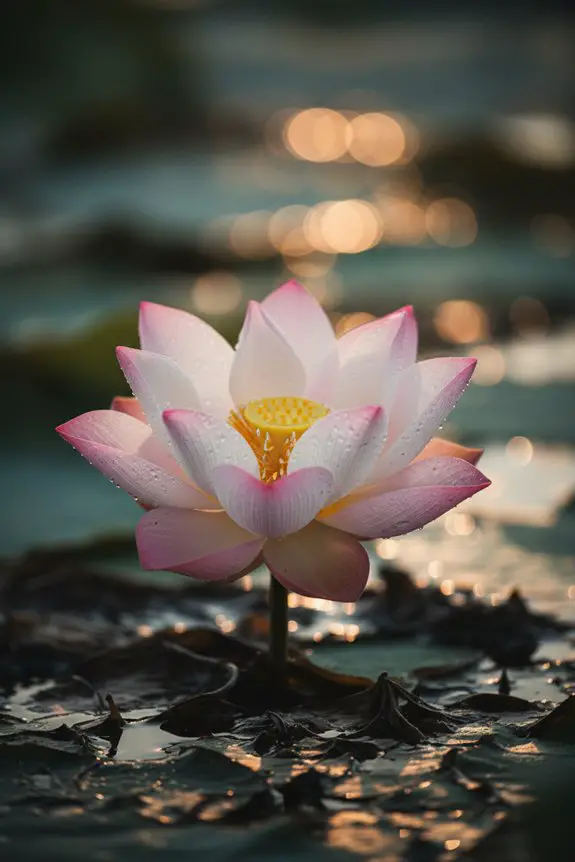
While ancient wisdom laid the foundation for lotus symbolism, contemporary society has embraced this flower with renewed passion and creative energy.
Artists paint its delicate pink and white petals across canvases, while yoga studios display its graceful form to inspire inner peace and transformation. The lotus symbolism transcends borders today, representing resilience and beauty emerging from muddy depths.
Its cultural significance blooms in tattoos, jewelry designs, and meditation spaces worldwide. Modern seekers connect with its timeless message: growth requires struggle, and purity can flourish anywhere.
This radiant flower bridges ancient traditions with present-day dreams of enlightenment and personal triumph.