How to Grow Lotus Flowers in Your Garden Pond
Growing lotus flowers transforms an ordinary garden pond into a serene sanctuary of beauty and tranquility.
These magnificent aquatic plants produce stunning blooms in shades of pink, white, and yellow that float gracefully above elegant emerald leaves.
With proper care and attention to their unique needs, anyone can cultivate these sacred flowers and create a peaceful retreat right in their backyard. The journey begins with understanding what these remarkable plants truly require to flourish.
Quick Summary
- Choose lotus varieties based on pond size: miniature for small spaces, standard for large ponds, ensuring harmonious proportions.
- Provide at least six hours of direct sunlight daily and maintain water depth between six to eighteen inches.
- Plant tubers horizontally in spring when water temperatures exceed 60°F, covering with two inches of soil.
- Use wide, shallow containers with dense garden loam and clay soil mix to support vigorous root growth.
- Maintain crystal-clear water at 70-80°F through filtration systems and perform partial water changes biweekly.
Choosing the Right Lotus Variety for Your Pond
Selecting the perfect lotus variety transforms an ordinary water garden
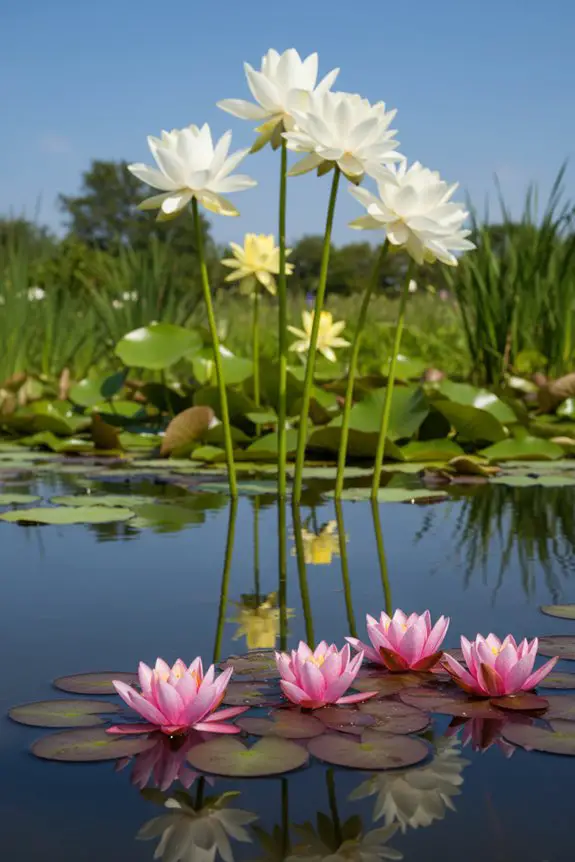
into a breathtaking sanctuary of color and tranquility.Gardeners should consider lotus color preferences first, choosing from pristine whites, blushing pinks, sunny yellows, or dramatic reds that complement existing landscapes.
Lotus size selection proves equally essential for achieving harmonious proportions within the pond environment. Miniature varieties thrive in containers and small spaces, reaching just twelve to eighteen inches tall, while standard lotus plants tower majestically at four to six feet, creating stunning focal points.
Bowl lotus varieties offer charming intermediate options, perfect for medium-sized water features that demand eye-catching beauty without overwhelming available space.
Understanding Sunlight and Water Depth Requirements
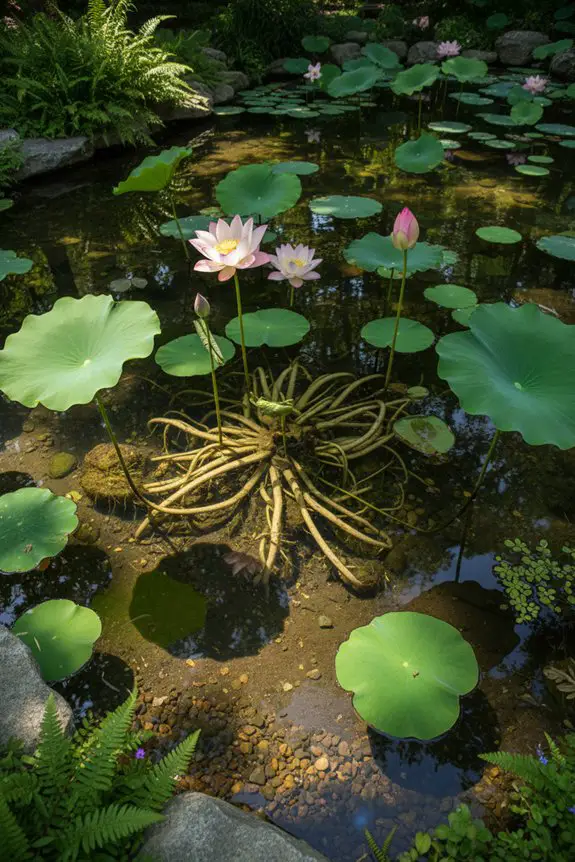
Successfully cultivating magnificent lotus blooms requires matching precise sunlight and water depth conditions to these aquatic treasures’ natural preferences.
These stunning plants crave abundant sunlight exposure, needing at least six hours of direct rays daily to produce their breathtaking pink, white, or golden petals.
The ideal water depth ranges from six to eighteen inches, allowing stems to stretch gracefully toward the sky while roots anchor firmly below.
Water clarity matters tremendously, as muddy conditions can block essential light from reaching developing leaves.
Crystal-clear water ensures every part of the plant receives the nourishment needed for spectacular flowering success.
Preparing the Perfect Growing Container and Soil Mix

Creating an ideal home for lotus flowers begins with choosing containers that balance beauty with functionality for these magnificent water plants.
Wide, shallow bowls measuring eighteen to twenty-four inches across provide ample container size for spreading roots to flourish gracefully. Heavy clay pots anchor plants securely beneath shimmering water surfaces, preventing unwanted tipping during breezy afternoons.
The perfect soil mix combines dense garden loam with a handful of clay, creating rich texture without excess soil drainage that would cloud precious pond water.
This thick, nutrient-packed foundation supports vigorous growth while maintaining crystal-clear conditions for admiring stunning blooms reflected in tranquil waters below.
Planting Lotus Tubers: Timing and Technique
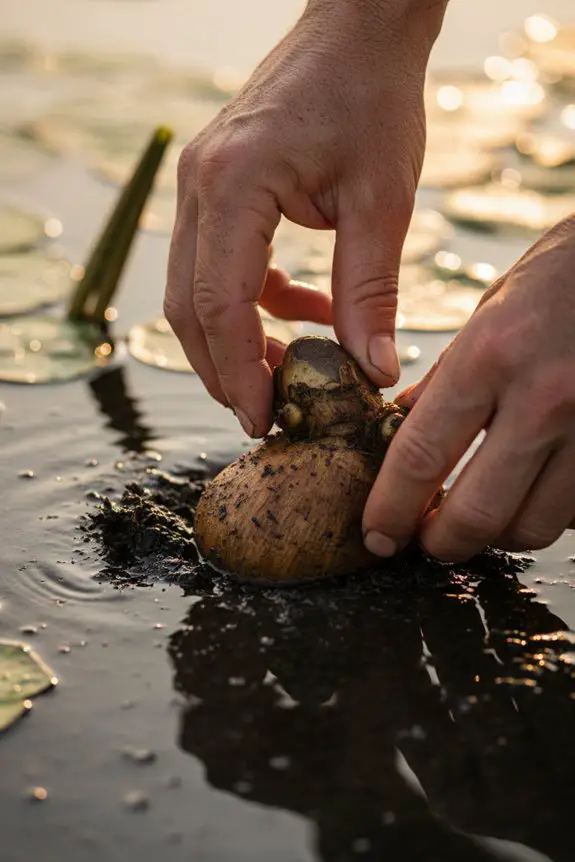
With containers prepared and soil ready, the moment arrives to nestle precious lotus tubers into their aquatic home.
Spring whispers the perfect timing, when water temperatures climb above 60 degrees Fahrenheit and frost becomes memory.
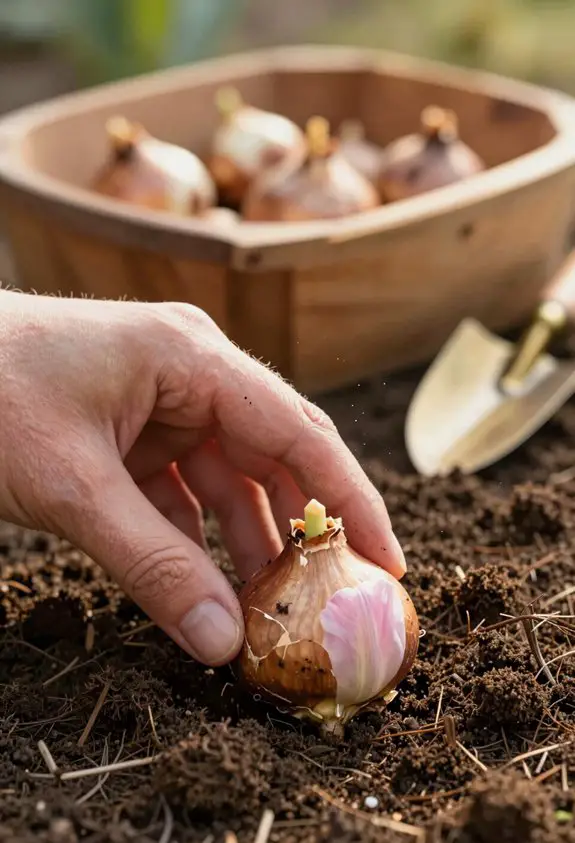
Tuber preparation begins with gentle inspection, ensuring growing tips remain unbroken and healthy.
Position these banana-shaped treasures horizontally across the soil surface, angling growing tips slightly upward toward sunlight.
Planting depth matters tremendously—cover tubers with merely two inches of soil, leaving tips exposed to breathe.
Add water slowly, allowing mud to embrace roots without disturbing placement.
Soon, emerald leaves will unfurl, transforming patience into floating magnificence.
Maintaining Water Quality and Temperature
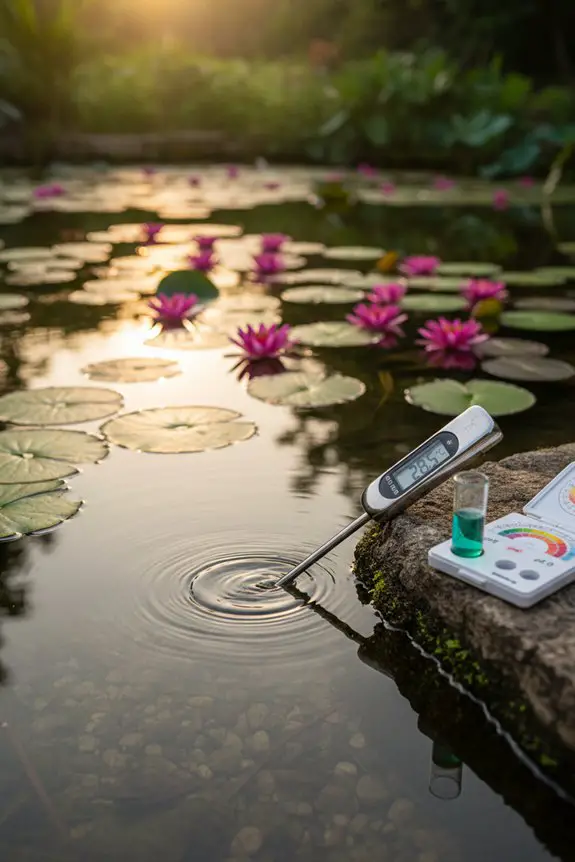
Once lotus tubers settle into their containers, water becomes their lifeline, demanding careful attention to both purity and warmth.
Crystal-clear conditions allow sunlight to penetrate deeply, fueling those magnificent blooms that drift above the surface like floating dreams.
Essential maintenance practices include:
- Water filtration systems remove debris and harmful bacteria, creating pristine conditions
- Temperature regulation between 70-80°F promotes vigorous growth and abundant flowering
- Regular water testing prevents algae buildup and maintains balanced pH levels
- Partial water changes every two weeks refresh nutrients without disturbing delicate roots
These straightforward steps transform ordinary ponds into thriving lotus sanctuaries where beauty flourishes naturally.
Fertilizing Your Lotus Plants Throughout the Growing Season
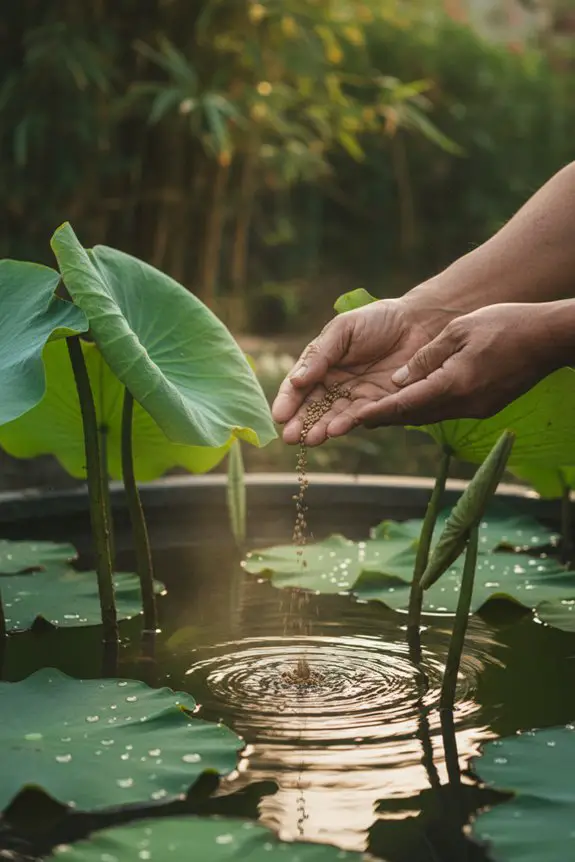
Lotus plants devour nutrients with remarkable appetite during their peak growing months, transforming fertilizer into those spectacular dinner-plate blooms and lush emerald pads.
Gardeners should match fertilizer types to specific growth stages, starting with slow-release tablets pushed deep into containers once leaves emerge in spring.
During summer’s explosive flowering period, monthly feeding with aquatic plant fertilizer sustains continuous blooming and vigorous foliage production. Tablets containing balanced ratios of nitrogen, phosphorus, and potassium work beautifully, releasing steady nutrition without clouding water.
As autumn approaches and growth naturally slows, reduce feeding gradually until plants enter their peaceful winter dormancy.
Overwintering and Year-Round Care Tips
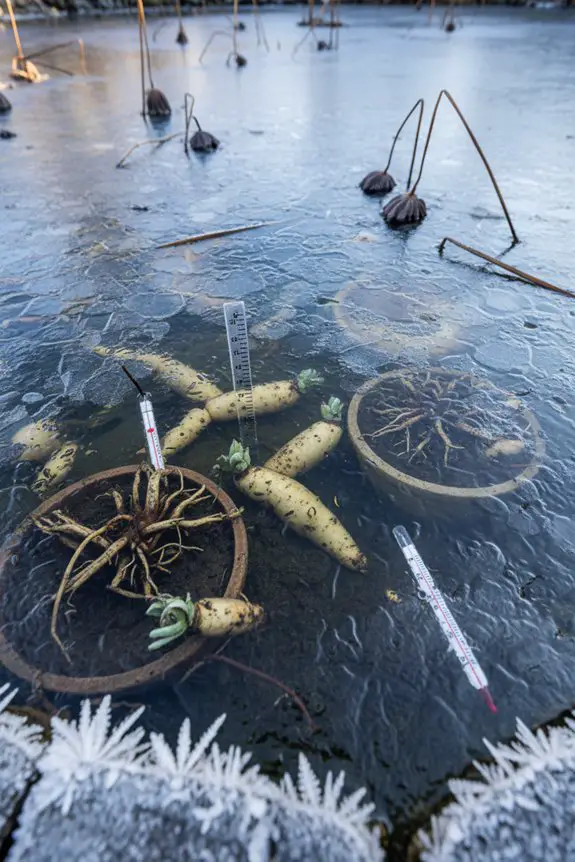
When frost threatens and daylight shrinks to brief autumn hours, gardeners must protect their precious lotus tubers from winter’s killing freeze.
Proper winter protection ensures vibrant blooms return each spring, transforming garden ponds into tranquil paradises once more.
Essential Year-Round Care Steps:
- Move containers below the ice line in deeper water, where tubers remain safely insulated throughout winter’s harshest days.
- Alternatively, store tubers indoors within damp sand at temperatures between 35-50°F for perfect dormancy.
- Monitor for aphids and beetles during growing months as part of effective pest management.
- Resume fertilizing when new growth emerges in spring’s warming sunshine.